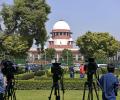
The Supreme Court collegium on Tuesday recommended to the Centre the names of Allahabad high court Chief Justice Rajesh Bindal and Gujarat high court Chief Justice Aravind Kumar for elevation as apex court judges.
A three-judge panel appointed by the Supreme Court of India has submitted its inquiry report to the Chief Justice of India on the cash discovery allegations against Allahabad High Court judge Justice Yashwant Varma. The panel, comprising Justice Sheel Nagu, Justice G S Sandhawalia, and Justice Anu Sivaraman, finalized its report on May 3. The report was submitted to the CJI on May 4 for further actions. The controversy was raised following a news report about the cash discovery row after a fire at Justice Varma's residence in Delhi on March 14. The report reportedly contains the findings of the panel into the alleged cash discovery row. Justice Varma has denounced any insinuation and said no cash was ever placed in the storeroom either by him or any of his family members.
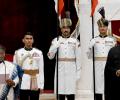
Justice Bhushan Ramkrishna Gavai was on Wednesday sworn in as the 52nd Chief Justice of India.

The apex court, however, turned down the plea of the petitioner and senior advocate Ram Jethmalani, for allowing him to go through the contents of the report.

The Supreme Court of India has criticized the Madhya Pradesh High Court's decision to sack a woman judge due to performance concerns, without considering the impact of a miscarriage on her ability to work. The court questioned the lack of similar criteria for male judges and highlighted the mental and physical trauma associated with a miscarriage. The case involves six women civil judges who were terminated by the state government over alleged unsatisfactory performance. While the high court reinstated four judges, the fate of the other two, including the judge who suffered a miscarriage, remains uncertain. The Supreme Court has issued notices to the high court registry and the judicial officers involved, seeking clarification on the termination criteria and emphasizing the importance of considering factors beyond quantitative performance assessments.
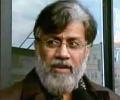
Tahawwur Rana, accused in the 2008 Mumbai terror attacks, has renewed his application to the US Supreme Court seeking a stay of his extradition to India. The Supreme Court will hear the application next month. Rana, currently detained in Los Angeles, claims his extradition would violate US law and expose him to torture in India due to his health and Muslim background. The US government has denied these claims and authorized his surrender to India, citing the Extradition Treaty between the two countries. The Supreme Court's decision will determine if Rana will face justice in India or remain in the United States.
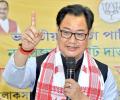
Justice Sodhi said the right to frame laws lies with Parliament.

A five-judge bench headed by Chief Justice J S Khehar said it would look into the aspect whether triple talaq is part of an "enforceable" fundamental right to practice religion by Muslims.

The Centre has opposed the imposition of fixed timelines on governors and the President for decisions on bills passed by state legislatures, arguing that such constraints were intentionally omitted by the Constitution's framers.

In more than one way, it's a setback for the DMK and Chief Minister Stalin in political terms. The electoral fall-out, if any, will have to wait until the next summer, only when assembly elections are due in the state, explains N Sathiya Moorthy.
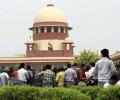
The government on Thursday said it has suggested to the Supreme Court that the search-cum-evaluation committee for the appointment of judges in the apex court and chief justices of high courts should consist of a representative nominated by the Centre.

The BJP government in Gujarat has formed a five-member committee, headed by a retired Supreme Court judge, to assess the need for the Uniform Civil Code (UCC) in the state and to draft a bill for the same. The committee will submit its report within 45 days. The decision has sparked debate with the Opposition claiming it is an attempt to divert attention from pressing issues ahead of the upcoming local body polls, while the government insists the UCC will protect the rights of tribal communities. The committee will consult with religious leaders, including those from the Muslim community.
In the aftermath of the 34-year-old techie's suicide in Bengaluru, a public interest litigation (PIL) in the Supreme Court has sought the appointment of an expert committee to review and reform the existing dowry and domestic violence laws to stop their misuse.

'You can't make art with a point of view of fear. You have to present the truth.' 'That's why such films are not being made these days.' 'You never put the truth in the script because you fear you might offend somebody.'

A bench of Justices Ujjal Bhuyan and Manmohan asked the Madras high court chief justice to transfer the cases involving the ADGP to another bench as it set aside the directive of the high court asking the police to take Jayaram into custody.

Law Minister Kiren Rijiju has hit out at former Supreme Court judge Justice B N Srikrishna for his remarks on lack of freedom of expression, saying those who speak without restrictions to abuse a popularly elected prime minister are crying about freedom of expression.
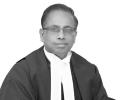
Justice Vishwanathan said he was in "the Common Cause (the NGO which had filed the PIL in coal scam cases). This case was of the ED (Enforcement Directorate), but still...".

The Supreme Court has directed chief secretaries of states and Union Territories (excluding West Bengal and Telangana) to appear on November 3 to explain the lack of compliance affidavits in the stray dogs case.
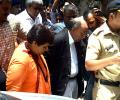
A detailed timeline of the 2008 Malegaon blasts case, from the initial explosion to the acquittal of all accused in 2025.
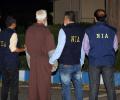
Tahawwur Hussain Rana, a Pakistani-origin Canadian businessman and accused in the 26/11 Mumbai terror attacks, has moved a court seeking permission to talk to his family members. The NIA has been directed to file a reply by April 23.

The Supreme Court of India has censured BJP MP Nishikant Dubey for his remarks against the judiciary, stating that his comments "tend to scandalize and lower the authority of the Supreme Court of India." The court dismissed a contempt petition against Dubey but issued a scathing order criticizing his remarks, which included accusations that the court was "taking the country towards anarchy" and that Chief Justice Sanjiv Khanna was "responsible for the civil wars taking place in the country." The court deemed Dubey's statements "highly irresponsible" and indicative of an attempt to "incite religious wars." The order highlighted the importance of maintaining public confidence in the judiciary and condemned attempts to undermine its authority.

A five-judge bench headed by Chief Justice D Y Chandrachud noted that Karnataka high court judge Justice Vedavyasachar Srishananda, who had made those observations, had on September 21 tendered an apology for his comments in the open court there.
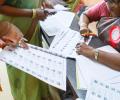
The Supreme Court declined to entertain a plea seeking a special investigation team (SIT) probe into alleged electoral roll manipulation in Bengaluru Central and other constituencies, advising the petitioner to approach the Election Commission of India.

Tahawwur Hussain Rana, a key figure in the 2008 Mumbai terror attacks, has been extradited from the US to India and produced before a Delhi court. Rana, a close associate of David Coleman Headley, was brought to India after the US Supreme Court dismissed his review plea against extradition. The National Investigation Agency (NIA) has sought 20 days of custody to interrogate Rana, citing clinching evidence, including emails. The agency believes that Rana's interrogation is critical to understanding the larger conspiracy behind the attacks and his role in planning them.
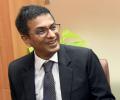
A bench of Justice Chandrachud and Hima Kohli got annoyed when a lawyer sought time to argue a matter and said he has circulated a letter for adjournment.

The Supreme Court on Tuesday asked about the "source of power" of the lieutenant governor under the Constitution and the law to nominate 10 aldermen to the Municipal Corporation of Delhi (MCD) without the aid and advice of the elected government.
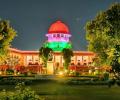
The report, according to the sources, states that the HC did not get the note of the Supreme Court collegium on the issue even after six months.

Batting for a fresh look at the reservation policy, Supreme Court judge Justice Pankaj Mithal on Thursday referred to a 1961 letter by Jawahar Lal Nehru in which the former prime minister lamented the habit of giving reservations and privileges to any caste or group.
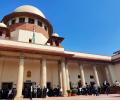
Justice Muralidharan had directed the state government to consider the representation for ST status to the majority Meitei community and write to the Centre within four weeks.

'Today, the State looks at everyone with suspicion.'

A special court in Goa on Monday acquitted State Transport and Panchayati Raj Minister Mauvin Godinho in a 1998 power rebate case, bringing an end to a 27-year-long legal battle.
The Centre has told the Supreme Court that imposing fixed timelines on governors and the president to act on bills passed by a state Assembly would amount to one organ of the government assuming powers not vested in it by the Constitution and lead to a "constitutional disorder".

While naming him as the NDA candidate for the Vice President's post, the BJP had described him as 'Kisan putra', a move seen in the political circles aimed at reaching out to the politically significant Jat community which had participated in huge numbers in the year-long farmers' protests against agriculture reform measures unveiled in June 2020.
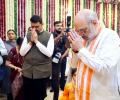
'Devendra Fadnavis is stating that Marathas must feel OBCs are not happy with reservations for the Marathas and therefore they are protesting.'

The Supreme Court is likely to pass direction, on Monday, over Justice Lodha committee plea alleging that the Board of Control for Cricket in India (BCCI) is violating the apex court order and committee directions regarding the BCCI reforms.
The Tamil Nadu government has urged the Supreme Court to dismiss the Presidential reference concerning the Governor's powers to assent to bills, arguing it is an 'appeal in disguise' to overturn settled law.

The Supreme Court of India has emphasized the importance of aggressive sterilization programs to control the growing population of stray dogs, balancing animal rights with public safety concerns.
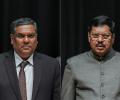
From demonetisation to sub-categorisation of Scheduled Castes to bulldozers, Justice Gavai has been part of several judgments.
'If we stay silent now, we betray the very foundation of justice in this country.'
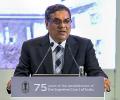
Justice Sanjiv Khanna 'belongs to that school of legal luminaries who give the highest primacy to facts.'
 © 2026 Rediff.com - Advertise with us - Disclaimer - Privacy Policy - Sitemap - Feedback - About us - Terms of use - Grievances